
For chemical extinguishing agents, Fleximecan has in its catalogue different components prepared for the extinguishing gas HFC 227 ea (known as fm200 gas), the HFC 23 gas (known as FE 13 fire fighting gas) and the HFC 125 extinguishing gas (known as FE 25 gas), although only the first of them we can supply it loaded at the moment.
HFC (hydrofluorocarbon) gases are the third generation of fluorine-based gases, consisting of hydrogen, fluorine and carbon. Concerns about the environmental impact of refrigerants are constantly on the rise and it is a relief to know that these gases do not destroy the ozone layer because they do not contain chlorine. It should also be noted that they are approximately 1000 times more potent than CO2.
HFC 227, also known as heptafluoropropane or fm200 gas, is the most widely used halon replacement gas in the world, with very satisfactory results. The NOAEL allows its use in residential areas with integrated immersion systems. HFC 227 acts by absorbing and extracting heat from the flames, so that when the temperature drops, the chemical combustion reaction stops. This HFC 227 gas is suitable for use in both Type A and Type B fires.
Among the clean extinguishing agents, FE 13 gas, also known as trifluoromethane or HFC 23 gas, is the gas with the lowest toxicity level, so it is safe to protect occupied areas and is not harmful to the ozone layer. FE 13 is suitable for areas where temperatures are very low and high extinguishing concentrations are needed because of its relatively low boiling point. As with other gases, it is not electrically conductive and is not corrosive, it is a clean agent that leaves no residue and avoids secondary damage.
HFC 125 gas, also known as pentafluoroethane or FE 25 gas, is a non-residue, electrically non-conductive, colourless and odourless gas. Like HFC 227, HFC 125 acts by absorbing and extracting heat from the flames, so that when the temperature drops, the chemical combustion reaction stops. Like HFC 23, it is also suitable for areas where temperatures are very low because it has a low boiling point, even lower than HFC 23. HFC 125 is suitable for use in type A fires.
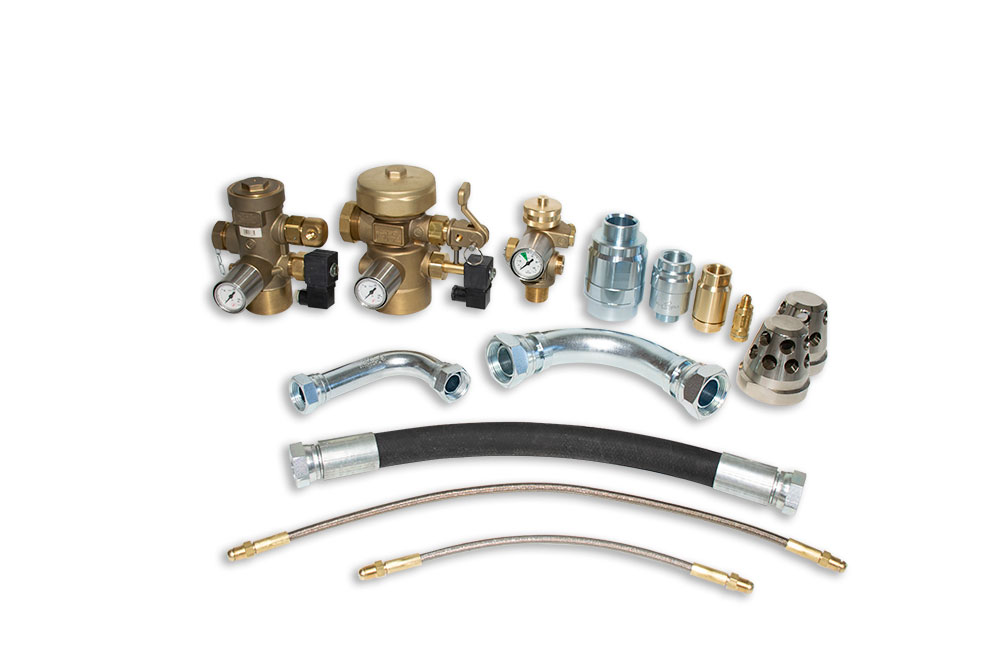
All these components with which modular systems or batteries can be configured, and which can also be requested individually are:
Contact us
Send us your message and we will respond as soon as possible!
There are various types of extinguishing systems, such as automatic sprinklers, clean agents, foam, and others. Choosing the most appropriate system will depend on the specific characteristics and needs of your business. It is recommended to conduct a risk assessment with fire safety specialists to determine the best option.
These are fire protection systems designed to suppress and extinguish fires through the use of specific chemicals. They are composed of a combination of chemical agents, fire detection equipment, and chemical-delivery devices.
The key advantage of chemical extinguishing systems is their ability to provide a rapid and effective response to a fire. They operate automatically, allowing for immediate action and reducing reaction time, thus minimizing fire damage.
The installation and maintenance of fire extinguishing systems must be performed by specialized and certified technical personnel. In most cases, the companies that manufacture or distribute these systems also offer installation and maintenance services to ensure their proper functioning.
Our team of experts provides comprehensive support and maintenance services to ensure the effectiveness and optimal operation of the systems over time.
As a specialized company, we can provide customized solutions to meet individual needs and ensure the company is prepared to face any emergency situation.
There are different types of kitchen fire extinguishing systems, each designed for a specific situation. Below, we describe the most common ones:
The choice of extinguishing system will depend on the type of kitchen, size, equipment, and fuel used. It is important to hire extinguishing system professionals like FLEXIMECAN to conduct a detailed assessment and determine the most appropriate system for your kitchen.
If the system is activated, the first thing you should do is turn off the heat source and evacuate everyone from the area. Then, call emergency services and wait for their arrival to assess the situation and verify that it is safe to re-enter the kitchen.
The right time to check fire extinguishers varies depending on several factors.